


Delays in Testing, Adjusting, and Balancing (TAB) services can cost you thousands – up to $30,000 per day in lost revenue or $25,000 in penalties. To avoid this, integrating TAB services early in your project is critical. TAB ensures HVAC systems meet design specs and pass inspections, keeping your project on schedule for occupancy approvals.
Here’s how to stay on track:
- Plan Early: Engage TAB contractors during the design phase to catch issues before construction starts.
- Prepare Systems: Verify HVAC equipment is fully operational before TAB begins.
- Schedule Wisely: Align TAB tasks with your project timeline, working backward from turnover dates.
- Communicate Clearly: Share progress updates regularly to address issues as they arise.
- Choose Certified Contractors: Certified TAB professionals ensure accuracy and compliance, helping you meet deadlines.
Skipping these steps risks costly delays and failed inspections. By planning ahead and partnering with the right team, you can avoid disruptions and secure timely project completion.
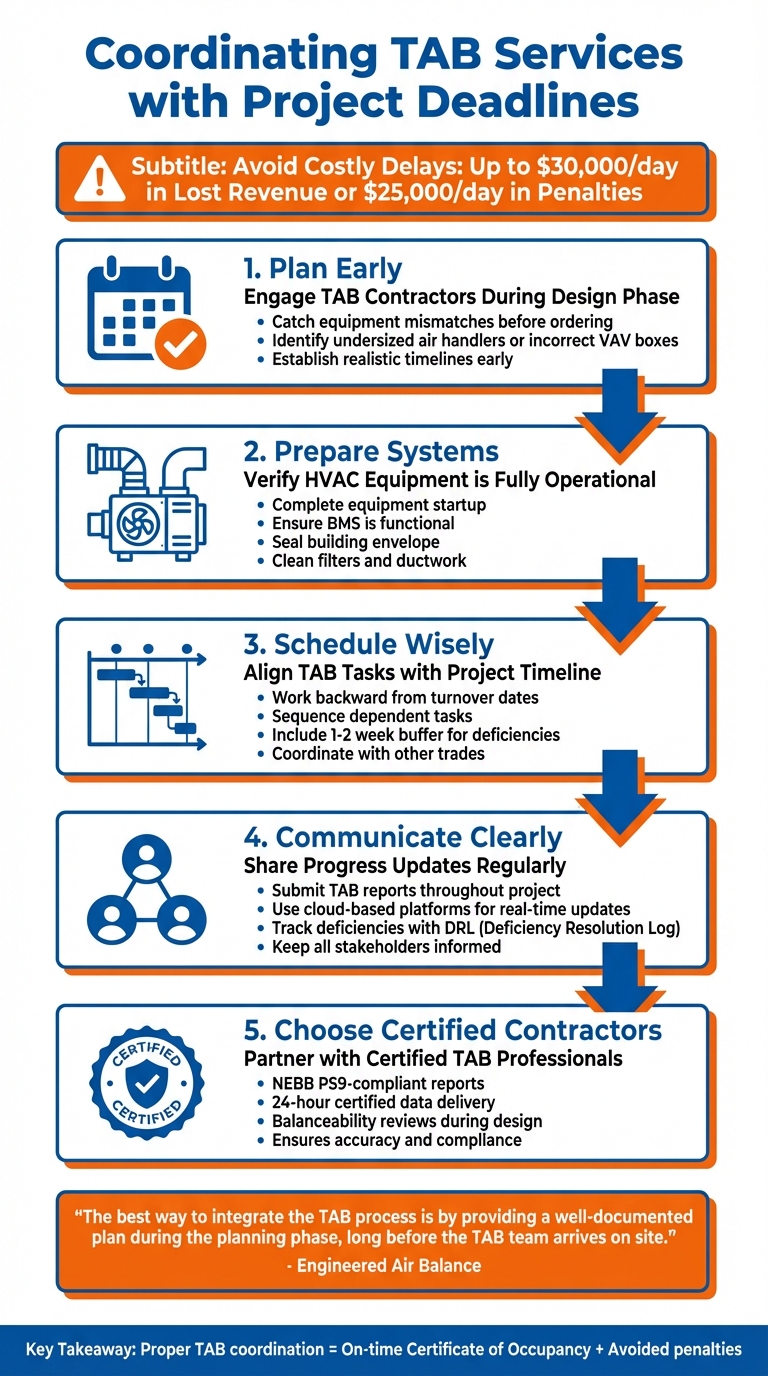
5-Step Process for Coordinating TAB Services with Project Deadlines
Plan TAB Services Early in Your Project
Getting your TAB (Testing, Adjusting, and Balancing) contractor involved before construction begins is one of the best ways to avoid delays later on. By addressing potential issues during the planning phase – before equipment is installed – you can sidestep costly change orders and ensure a smoother process.
"The best way to integrate the TAB process into the project schedule is by providing a well-documented plan to the construction team during the planning phase, long before the TAB team arrives on site." – Engineered Air Balance
When TAB contractors review mechanical schedules and control sequences during the design phase, they can catch mismatches – like undersized air handlers or incorrect VAV boxes – before equipment is ordered. This early input also helps establish realistic timelines by clarifying how long it will take to balance specific systems or zones. With this proactive approach, you can define your TAB needs and set clear expectations for the project.
Identify TAB Requirements During Design
Early involvement of a TAB contractor allows you to pinpoint critical requirements during the design phase, making the rest of the process more efficient. Without early input, you risk vague or incomplete instructions – such as unclear directives to "calibrate controls" – which can lead to inconsistent pricing and misaligned expectations.
By identifying TAB requirements early, you ensure that essential prerequisites – like a sealed building envelope, operational control systems, and completed equipment startup – are built into the master construction schedule. These clearly defined milestones help other trades understand their responsibilities and prevent delays caused by unfinished work or scheduling conflicts.
Create a Detailed TAB Plan
Submitting a comprehensive TAB plan alongside your mechanical submittal data is crucial. This plan should outline key details, including an equipment list, required prerequisites, estimated durations for balancing, and manpower needs.
It’s important to note that adding more technicians won’t necessarily speed up TAB work. Many digital control systems only allow one operator to access the automation software at a time, limiting simultaneous tasks. Your plan should also address potential accessibility challenges, such as scheduling conflicts with floor waxing, carpeting, or fire alarm testing, which might restrict access or require HVAC shutdowns.
| TAB Plan Component | What to Include |
|---|---|
| Equipment List | Inventory of all HVAC components requiring testing |
| Prerequisites | Construction milestones (e.g., startup, controls) needed before TAB work |
| Durations | Estimated timeframes for balancing specific systems or building zones |
| Manpower Requirements | Number of technicians required, considering digital controls limitations |
| Instrument List | Details of calibrated tools, including manufacturer and model numbers |
"We provide durations in different areas of a building so they can be worked into the construction schedule. And based on the durations for each one of these systems or areas, we can figure out the total duration for the project." – Nick Muscolino, Vice President, Aero Building Solutions
Additionally, include a Deficiency Resolution Log (DRL) in your plan. This tool tracks any issues found during testing, ensuring they’re resolved and verified before the final report is submitted. A well-maintained DRL helps prevent last-minute problems that could delay your certificate of occupancy.
Prepare Systems Before TAB Work Starts
Once your TAB plan is finalized, it’s time to ensure that all HVAC systems are fully operational. Any delays in equipment startup can disrupt testing, increase mobilization costs, and even lead to costly liquidated damages ranging from $5,000 to $25,000 per day. Keep in mind, TAB contractors are responsible for balancing systems – not fixing installation errors or completing unfinished work. Start with a thorough review of equipment installation and system startup.
Verify Equipment Installation and Startup
Schedule a joint walkthrough with your mechanical contractor to confirm the proper installation and startup of all HVAC components. Pay close attention to these critical areas:
For air distribution systems, ensure fans are rotating in the correct direction, air handling unit static pressure and flow align with design specifications, and ductwork is free of debris and properly capped. Check that diffusers, registers, and grilles are installed and connected. Make sure manual, fire, smoke, and volume dampers are open, filters are clean and installed, and flex ducts are taut without kinks or crushing.
For hydronic systems, verify that water systems have been flushed, filled, and vented. Confirm pumps are functioning properly, strainer baskets are clean, and all service and balancing valves are open.
For controls, ensure the Building Management System (BMS) is fully operational and managing the HVAC sequence, including temperature and humidity controls. Without functional controls, TAB contractors won’t be able to adjust setpoints or flows. Also, verify that thermal overload protection is in place for all electrical equipment and that Variable Frequency Drives (VFDs) are operating at the correct frequency with spare capacity.
| System Category | Verification Requirement |
|---|---|
| Air Systems | Fans rotating correctly; dampers open; filters installed; ducts clean |
| Hydronic Systems | Systems flushed/vented; pumps operating correctly; strainers clean; valves open |
| Controls/BMS | Full communication established; HVAC sequence verified; sensors calibrated |
| Physical Site | Building envelope sealed; access to all equipment provided |
| Electrical | Thermal overload protection in place; VFDs functioning at proper frequency |
Conduct Pre-TAB System Readiness Checks
After confirming proper equipment installation, conduct a final pre-TAB walkthrough with the contractor to resolve any lingering issues. This collaborative step is essential for identifying physical obstructions, control integration problems, or equipment malfunctions that could delay the TAB process.
Ensure equipment operates continuously without tripping or triggering alarms. Verify the building envelope is complete, with all doors, windows, and penetrations sealed to maintain effective pressure control. Additionally, confirm your construction team has provided secure access to all equipment rooms and control systems, particularly in restricted areas like hospitals. Addressing these details before the TAB team begins work minimizes financial risks and helps prevent costly change orders or back-charges.
Align TAB Services with Your Project Schedule
Once your system is prepped for testing, it’s crucial to weave Testing, Adjusting, and Balancing (TAB) tasks into your overall project schedule. Ignoring this step or delaying contractor involvement can result in serious bottlenecks. Rebecca T. Ellis, P.E., President of Questions & Solutions Engineering, Inc., highlights this common issue:
"Successful TAB completion and documentation is a prerequisite for starting HVAC system functional performance testing. In many projects… the TAB contractor is often the last person brought onto a job site. Unfortunately, that is sometimes at or after the substantial completion date".
To sidestep these delays, plan TAB activities early by working backward from your project’s turnover date. For instance, if testing a chilled water system requires 10 days and balancing each floor takes 5 days, calculate the start date for your TAB team accordingly. Nick Muscolino, Vice President at Aero Building Solutions, explains the benefits of this approach:
"We provide durations in different areas of a building so they can be worked into the construction schedule… working the schedule backwards will help communication with the other construction teams, as well as hold everyone accountable".
Just like system readiness checks, detailed scheduling is essential to avoid unnecessary costs and delays.
Schedule TAB Work in Sequence and Parallel
Organize TAB tasks logically: sequence work that depends on prior balancing – like chilled water systems before air-side terminal units – and run independent tasks, such as balancing separate floors or mechanical zones, at the same time. Keep in mind that Direct Digital Control (DDC) systems often limit operations to one user at a time. Coordinate TAB activities around other site tasks to avoid HVAC shutdown delays and include a buffer of one to two weeks to address any deficiencies identified during testing. Proper sequencing and timing ensure smoother updates and progress for all stakeholders.
Communicate Schedule Requirements to All Stakeholders
Clear communication is key to keeping the project on track. As Muscolino points out:
"If a controls contractor isn’t done getting controls set up to the mechanical equipment, we can’t start our job until that contractor is done. So, we need to clarify our duration for the project and set schedules up accordingly".
To keep everyone informed, submit TAB reports throughout the project instead of waiting until the end. This allows your team to address issues as they arise, preventing last-minute bottlenecks. Use cloud-based platforms to share updates, including field data, time-stamped photos of problem areas, and real-time progress reports. Regular updates help resolve on-site problems quickly and avoid costly delays, which could lead to liquidated damages ranging from $5,000 to $25,000 per day.
Coordinate with the other trades
- Finish ductwork and electrical installation before TAB starts, so the balancer is not working around unfinished work.
- Give every trade the TAB schedule and update them as dates move. Surprises on the day cost mobilization fees.
- Use your project management software to track the TAB date and the prerequisites that gate it.
Manage Documentation and Resolve Issues Quickly
Keeping detailed records and resolving issues promptly are key to ensuring TAB work stays on track. The Deficiency Resolution Log (DRL) plays a central role here. This log systematically records every issue identified during testing. Instead of waiting until the project wraps up, submit your DRL regularly to allow on-site repairs during testing. This approach helps maintain efficiency and keeps the project moving forward.
Organize Project Documentation
An active DRL is just one part of the puzzle. Your TAB team also needs easy access to up-to-date documentation to monitor progress effectively. Before arriving on-site, ensure the team has centralized access to construction drawings, specifications, and approved submittals. It’s equally important to organize other key documents, such as system readiness checklists, field data forms (TAB Layout), and calibration records for testing equipment. These records should include details like the manufacturer, model, serial number, and the most recent calibration date for every instrument. Avoid aiming for reports that claim everything is "perfect" – a trustworthy TAB report should reflect actual system performance, including any minor deficiencies.
Track and Address Deficiencies
When the construction team resolves a deficiency, your TAB contractor must confirm the fix through a formal backcheck process. This verification should be documented in the DRL, and any unresolved issues should be clearly labeled as "Action Items" or "Info Items" in the final report appendix. Leveraging cloud-based platforms can significantly streamline this process. Field technicians can update the project team in real time as deficiencies are identified, eliminating the need to wait for manual reports at the end of the week. This instant communication not only improves efficiency but also helps avoid costly liquidated damages, which can range from $5,000 to $25,000 per day. By staying on top of documentation and resolving issues quickly, TAB services can meet critical project milestones and stay aligned with the schedule.
| Document Type | Primary Purpose | Essential Elements |
|---|---|---|
| TAB Plan | Planning & Integration | Equipment list, prerequisites, manpower needs, timeline |
| Deficiency Resolution Log (DRL) | Issue Management | Deficiency description, resolution status, backcheck verification |
| Final TAB Report | Certification & Record | Signed certification, instrument calibration list, system data |
When testing finishes, review the results with the HVAC team and the other stakeholders, fix flagged issues promptly, and keep the written record. It speeds up the next project.
Partner with Experienced TAB Contractors
Selecting the right TAB (Testing, Adjusting, and Balancing) contractor can make all the difference when it comes to hitting your project’s turnover date. Bringing a certified TAB professional on board early ensures accurate performance verification and helps you avoid delays. The contrast between a typical "test and go" firm and an experienced partner is stark – it could mean waiting two weeks for reports versus receiving certified data within just 24 hours.
Benefits of Certified TAB Services
Certified TAB contractors go beyond simply running tests. They conduct "balanceability" reviews during the design or pre-construction phases, identifying potential issues like missing dampers, undersized air handlers, or incorrect VAV boxes before equipment is even ordered. Addressing these problems early prevents expensive rework that could derail your project timeline. Their certification underscores the importance of integrating TAB services at the earliest stages of your project.
"The whole thing is about communication. Getting in there early, forcing the conversation, and trying to take control of a project because we know, as the balancer, what it takes to close out a job." – Nick Muscolino, Vice President, Aero Building Solutions
Certified TAB professionals also play a critical role in optimizing project schedules based on actual conditions. With potential liquidated damages ranging from $5,000 to $25,000 per day and healthcare revenue losses hitting $10,000–$30,000 daily, staying on schedule is non-negotiable. These experts deliver NEBB PS9-compliant reports, which are essential for releasing project retainage and securing Certificates of Occupancy. Their precision and professionalism help keep your project on track and avoid costly setbacks.
Air Balance Masters: Your TAB Partner
Certified TAB professionals are key to turning detailed planning into tangible results. Air Balance Masters specializes in certified air balance testing, reporting, and certification services for HVAC and general contractors across MD, VA, PA, NJ, NY, DE, and DC. Their expertise ensures HVAC systems meet design specs, helping contractors secure final inspections and Certificates of Occupancy without unnecessary delays. By partnering with a firm that understands local AHJ requirements and employs systematic deficiency tracking, you gain the clarity and accountability needed to meet project deadlines. Visit Air Balance Masters to see how their services can align with your project timeline.
Schedule TAB so turnover is not delayed
Integrating TAB services into your project schedule is essential to sidestep costly delays and financial penalties.
Coordinating TAB services with project timelines helps you avoid missed deadlines that could jeopardize your Certificate of Occupancy or payment schedule. With liquidated damages ranging from $5,000 to $25,000 per day and revenue losses for facilities like surgical centers reaching $10,000 to $30,000 daily, overlooking the impact of air balancing on building performance can be a costly mistake.
Starting early is key. Bringing TAB professionals into the design phase helps identify equipment mismatches and control sequence issues before construction begins – when fixes are far less expensive. A well-defined TAB Plan lays out manpower needs and realistic timelines, helping to avoid the dreaded "punch-list purgatory" that delays project completion.
System readiness is another critical factor. Ensuring equipment startup, functional controls, and a sealed building envelope eliminates unnecessary rework. As Rebecca T. Ellis, P.E., wisely points out:
"No amount of commissioning can make an unbalanced system work".
Walk-throughs and readiness checklists ensure prerequisites are in place, allowing TAB professionals to work efficiently and effectively.
Proper scheduling and open communication are equally important. Working backward from your turnover date ensures that mechanical, electrical, and controls teams complete their tasks in the correct order. Submitting TAB reports in stages rather than all at once helps address issues as they arise, rather than at the end when time is running out.
Ultimately, partnering with certified TAB professionals like Air Balance Masters – who provide NEBB PS9-compliant reports and understand local AHJ requirements – can make all the difference. When every trade knows its role and the schedule is built around achievable TAB timelines, you’ll be well-positioned to secure final inspections and Certificates of Occupancy on time, avoiding the chaos of last-minute problems.
FAQs
When should I schedule TAB to avoid delaying turnover?
Schedule TAB (Testing, Adjusting, and Balancing) during the final stages of construction, just before the building is occupied. This timing helps keep the project on schedule, prevents turnover delays, and ensures everything is ready for timely completion.
What must be complete before the TAB team can start?
Before the TAB team gets to work, it’s crucial that the HVAC systems are fully installed and running. This step allows them to carry out and record the testing, adjusting, and balancing (TAB) process effectively. Since TAB is required before functional performance testing can happen, being prepared upfront helps prevent delays and keeps the project on schedule.
How can I speed up deficiency fixes without failing inspection?
To speed up resolving deficiencies and steer clear of inspection failures, prioritize detailed pre-construction coordination, ensure systems are properly prepared, and maintain clear, timely communication with TAB professionals. Tackling potential problems early and committing to comprehensive planning and documentation can help avoid setbacks during testing and balancing. These efforts keep the process efficient and your project on track.


