


Maintaining clean indoor air in schools is critical for student health, especially with allergens like pollen, mold, and dust circulating in classrooms. HVAC systems are a key solution, as they filter air, control moisture, and ensure proper ventilation. Here’s how schools can optimize their HVAC systems for allergen control:
- Filters Matter: Use high-efficiency filters (MERV 13 or higher) to trap allergens like mold spores and pollen. Regularly check and replace filters based on pressure readings.
- Ventilation Rates: Ensure at least 15 cubic feet per minute (cfm) of fresh air per person to dilute pollutants.
- Humidity Control: Keep indoor humidity between 30–60% to prevent mold growth.
- System Maintenance: Clean air intakes, ducts, and diffusers while monitoring for blockages or leaks.
- IAQ Monitoring: Use CO₂ sensors, hygrometers, and pressure monitors to track air quality and adjust HVAC settings as needed.
Upgrading HVAC systems and following a consistent maintenance schedule not only improves air quality but also supports better attendance and learning outcomes by reducing allergen exposure.
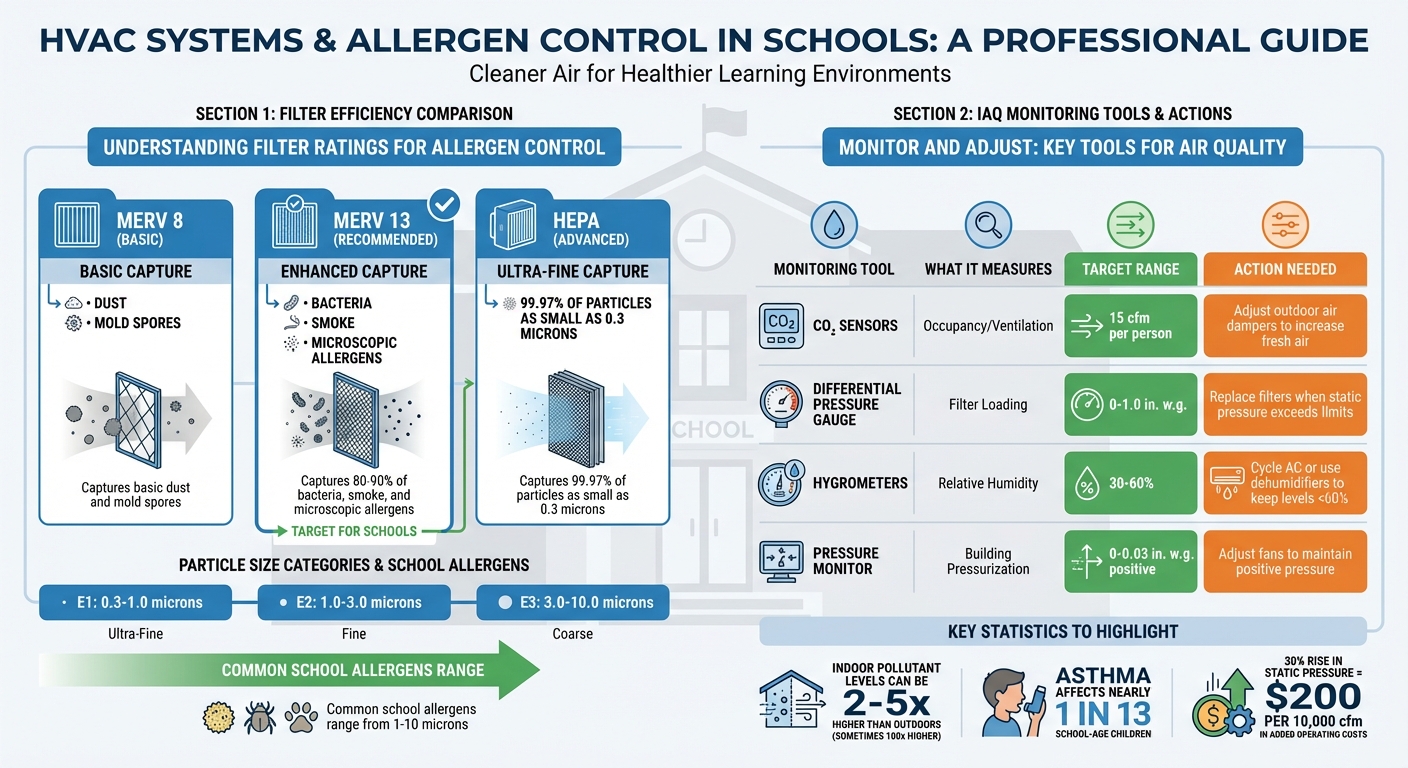
HVAC Filter Ratings and Air Quality Monitoring Tools for School Allergen Control
Air Filters 101 | Choosing the Right Filter | The Eco Plumbers, Electricians, and HVAC Technicians

Assessing Your School’s HVAC System for Allergen Control
Start by evaluating your HVAC system’s filter efficiency. Check the filter’s MERV rating, which ranges from 1 to 16 and indicates how well it captures small particles. Many schools rely on MERV 8 filters, which handle basic dust and mold spores. However, MERV 13 filters are a better choice for allergen control, as they capture bacteria, smoke, and microscopic allergens with 80–90% efficiency. If your filters lack a MERV rating, they’re likely low-efficiency and allow allergens to circulate. This assessment is a key first step in planning targeted improvements.
Filter Ratings and Efficiency Explained
The effectiveness of a filter depends on the size of particles it can trap. Common school allergens range from 1 to 10 microns, and filters are rated based on their ability to capture particles in three size categories: E1 (0.3–1.0 microns), E2 (1.0–3.0 microns), and E3 (3.0–10.0 microns). While MERV 13 filters perform well across these ranges, HEPA filters go even further, capturing 99.97% of particles as small as 0.3 microns. However, keep in mind that HEPA filters create significant airflow resistance, which can strain HVAC fans if they aren’t designed to handle the added pressure.
It’s also worth noting that MERV-A ratings, which rely on electrostatic charge, may show reduced efficiency over time as the charge diminishes. Additionally, inspect filter housings for gaps where air could bypass the filter. Use gaskets and sealants to ensure a tight seal between the filter rack and access door.
Reviewing System Design and Maintenance Records
Take a close look at maintenance logs to check how often filters are replaced and air intakes are cleaned. Proper HVAC design and regular upkeep are essential for maintaining healthy indoor air. Inspect air diffusers and return registers for dust buildup or blockages, as these could indicate areas needing attention. This combination of record reviews and physical inspections will help you identify necessary adjustments and set up future maintenance plans.
Determine whether your school uses central air handling units (AHUs) or individual classroom ventilators. Central AHUs are generally better for allergen control because they can accommodate thicker, high-efficiency filters and are easier to maintain. Also, check the placement of outdoor air intakes. These should be located at least 25 feet away from potential contaminant sources like bus loading zones or dumpsters and positioned at least 8 inches above ground or roof surfaces. To monitor filter performance, use a differential pressure gauge (0–1.0 in. w.g.) on filter banks to know when replacements are needed.
Calculating Costs and Benefits of System Upgrades
Upgrading to high-efficiency filters comes with increased costs. For instance, a 30% rise in static pressure can add about $200 per 10,000 cfm to operating expenses. However, these costs should be weighed against the benefits, such as better indoor air quality and compliance with ventilation standards. To determine if your system is meeting ventilation needs, calculate your current ventilation rate. Schools should provide roughly 15 cfm of outdoor air per person. If your system isn’t meeting this standard, upgrading to MERV 13 filters without boosting fan capacity could reduce airflow even further. Balancing these factors is essential for making informed decisions about HVAC upgrades.
Upgrading HVAC Systems to Reduce Allergens
After evaluating your HVAC system, you can focus on specific upgrades to improve filtration and ventilation, which play a key role in reducing allergens.
Installing High-Efficiency Filters
Upgrading to MERV 13 filters is a solid starting point for better allergen control. These filters are designed to capture over 90% of airborne particles, thanks to their pleated design, which increases surface area. However, before making the switch, check your system’s owner manual to ensure it can handle the added airflow resistance. To minimize pressure drop, consider installing filters in a "V" configuration or opting for deep-pleated bag filters. Adding a pre-filter with approximately 10% efficiency upstream can trap larger particles, extending the life of your high-efficiency filters and helping keep replacement costs manageable. Also, ensure the filter slots can accommodate 2-inch filters for proper installation.
Keep in mind that enhancing airflow is just as important as upgrading your filters.
Optimizing Airflow and Ventilation
Effective ventilation is critical to maintaining good indoor air quality. Start by ensuring that outdoor air intakes are positioned according to established guidelines. To manage variable conditions, install airflow measuring stations that adjust outdoor air volumes by modulating dampers. This can help counteract challenges like wind or stack effects. For spaces with fluctuating occupancy – such as gymnasiums or auditoriums – CO2 sensors are a smart addition. These sensors enable demand-controlled ventilation, ensuring the system provides fresh air only when needed. Regular calibration of these sensors is essential to maintain accuracy. Finally, seal all duct joints and seams to prevent air leaks, which can allow unfiltered air to enter and reduce the efficiency of your system.
Creating Maintenance Schedules for Long-Term Performance
Preventive maintenance plays a key role in keeping HVAC systems running efficiently while managing allergens. By setting up a formal maintenance schedule, you can protect both system performance and your investment. This plan should include regular inspections, a dedicated budget, and a well-organized work order system. Additionally, create a school-specific "owner’s manual" that details essential system information, maintenance timelines, equipment manuals, and contact details for your design and construction teams. These steps lay the groundwork for tracking system performance and training staff, as discussed below.
Filter Changes and System Cleaning
Use differential pressure gauges (0 to 1.0 in. w.g.) to monitor filter banks and determine when filters need replacement. Regularly clean air supply diffusers, return registers, and outdoor air intake screens to avoid dust buildup. For quick access, ensure outdoor air intake screens are fitted with hinged grilles. Also, routinely inspect condensate pans to confirm proper drainage and prevent mold growth.
Tracking System Performance
Keep detailed records for each HVAC zone. This should include outdoor air volumes, occupancy design, filter types, inspection port locations, and updated as-built drawings to streamline troubleshooting. Maintain building pressure between 0 and 0.03 in. w.g. positive relative to the outdoors to minimize the infiltration of unconditioned moist air and pollutants. Conduct moisture inspections and address any areas of wetness within 24 to 48 hours to prevent mold growth. Additionally, calibrate CO₂ sensors regularly to ensure demand-controlled ventilation systems function accurately.
Training Custodial Staff on Allergen Control
Provide custodial staff with at least 3.5 hours of specialized training focused on allergen control. This training should cover the basics of ventilation, maintenance protocols, and cleaning techniques. Equip staff with HEPA-filtered vacuums and microfiber cloths to effectively capture fine particles. Teach proper chemical dilution methods to minimize VOCs and emphasize keeping air intakes clear of obstructions. Store cleaning supplies and gasoline-powered equipment in well-ventilated areas outside the main building. Thorough training ensures custodial teams are prepared to support the HVAC strategy and positions schools for advanced air quality monitoring in the future.
"Every dollar that is saved from an energy and preventive maintenance standpoint is a dollar that can be spent toward educating our children and keeping them healthy."
- Dave Berger, Construction Services Specialist, Des Moines Public Schools
Using Indoor Air Quality Monitoring for Better Results
Once you’ve set up regular maintenance routines, indoor air quality (IAQ) monitors can take your HVAC system’s performance to the next level. These devices eliminate guesswork by providing real-time insights into your air quality, helping you address potential allergen issues before they become a problem.
Setting Up IAQ Monitoring Systems
Start by creating a baseline IAQ profile. Install CO₂ sensors in areas with high occupancy to automatically monitor ventilation needs. Add hygrometers to keep an eye on humidity, ensuring it stays within the recommended range of 30% to 60%. Use pressure monitors to maintain building pressurization between 0 and 0.03 in. w.g. positive relative to the outdoors – this helps block unconditioned air and outdoor allergens from entering the building.
To streamline monitoring, integrate these sensors with your building automation system and use a clear numbering scheme. This setup allows you to track equipment performance and schedule maintenance efficiently. With these baseline measurements in place, you can tweak your system to maintain optimal air quality.
Adjusting HVAC Settings Based on Data
Regularly review the data from your IAQ monitors to make precise adjustments. For example, if CO₂ levels exceed design thresholds, open outdoor air dampers to increase fresh air intake. If static pressure readings rise beyond acceptable limits, replace filters promptly to avoid releasing trapped allergens back into the air. Should humidity levels climb above 60%, activate your air conditioning system or use portable dehumidifiers to bring levels back down.
Ignoring these issues can be costly – just a 30% rise in static pressure across a cooling coil can add $200 in energy costs for every 10,000 cfm of airflow. By acting quickly, you can improve air quality and control expenses. These adjustments, combined with routine maintenance and professional oversight, ensure your system runs efficiently and effectively.
Working with Air Balance Professionals
To make sure your data-driven adjustments align with your system’s design, bring in certified air balance professionals. For new construction or major renovations, these experts verify that your HVAC system meets design specifications. They also conduct testing and balancing to confirm you’re achieving ASHRAE‘s minimum outdoor air ventilation rate of 15 cfm per person in classrooms.
Air balance professionals also play a key role in managing pressure control, helping to prevent allergens from spreading through ductwork. For example, Air Balance Masters, based in the Mid-Atlantic region, offers services like testing, reporting, and certification to help schools pass final inspections and obtain certificates of occupancy. Commissioning your system after construction ensures it operates at peak efficiency and meets design goals. This is especially critical given that indoor pollutant levels can be 2 to 5 times higher – and sometimes even more than 100 times higher – than outdoor levels.
| Monitoring Tool | Target Measurement | HVAC Adjustment Action |
|---|---|---|
| CO₂ Sensors | Occupancy/Ventilation | Adjust outdoor air dampers to increase fresh air |
| Differential Pressure Gauge | Filter Loading | Replace filters when static pressure exceeds limits |
| Hygrometers | Relative Humidity | Cycle AC or use dehumidifiers to keep levels <60% |
| Pressure Monitor | Building Pressurization | Adjust fans to maintain 0 to 0.03 in. w.g. positive pressure |
Control allergens through the HVAC
Addressing allergens in schools calls for a well-rounded strategy that blends thoughtful HVAC design, consistent maintenance, and expert guidance. Key practices like using high-efficiency filters, maintaining humidity levels between 30–60%, and ensuring ventilation rates of 15 cfm per person can significantly reduce indoor pollutants – often found to be two to five times higher than outdoor levels. Regularly changing filters is also critical to avoid dust being recirculated into classrooms.
These measures directly contribute to creating healthier and more effective learning environments. As the EPA notes:
"Good IAQ contributes to a favorable environment for students, performance of teachers and staff and a sense of comfort, health and well-being".
This is especially important when considering that asthma, the leading cause of school absenteeism, affects nearly one in 13 school-age children. By mitigating allergens, schools can help improve attendance and support academic success.
Certified testing and balancing play a vital role in ensuring HVAC systems function as intended, whether during new construction or renovation projects. Professionals confirm that ventilation rates align with ASHRAE standards and that building pressurization stays within the optimal range of 0 to 0.03 in. w.g. positive. This helps keep outdoor pollutants from seeping indoors. In the Mid-Atlantic region, organizations like Air Balance Masters specialize in these essential certifications, enhancing air quality while also delivering operational cost savings over time.
FAQs
How do MERV 13 filters help schools maintain cleaner air?
MERV 13 filters are an important tool for improving air quality in schools. They are designed to capture a variety of airborne particles, including allergens, bacteria, and viruses, which helps limit the spread of illnesses and creates a healthier space for students and staff alike.
These filters are especially effective in busy areas like classrooms, where clean air is a must. By filtering out harmful particles, they help ensure better breathing conditions and enhance indoor air quality, making schools safer and more comfortable for everyone inside.
How do IAQ monitoring systems in school HVAC systems help with allergen control?
Indoor Air Quality (IAQ) monitoring systems are essential tools for schools aiming to manage allergens effectively. These systems deliver real-time air quality data, enabling schools to identify and address heightened levels of allergens, pollutants, or airborne pathogens as soon as they arise. This quick response helps create a healthier environment, benefiting both students and staff.
Beyond allergen management, IAQ monitoring plays a vital role in ensuring HVAC systems operate efficiently. By optimizing ventilation and filtration, these systems enhance outdoor air intake and maintain effective filtration, which is key to minimizing allergens and curbing the spread of airborne illnesses. In short, IAQ monitoring systems help schools maintain safer, more comfortable learning environments while keeping HVAC systems running at peak performance.
How can schools improve air quality with HVAC systems while staying within budget?
Schools can improve indoor air quality without breaking the bank by focusing on smart, practical HVAC strategies. One effective step is upgrading to high-efficiency filters, such as MERV-13 or higher, which can significantly cut down on allergens and pollutants at a reasonable cost. Routine upkeep, like cleaning ducts and replacing filters, not only keeps systems running smoothly but also extends their lifespan, helping avoid expensive replacements.
For quicker results, portable HEPA air cleaners are a great option for classrooms or areas with high foot traffic. They’re an affordable way to boost air quality without requiring major renovations. Additionally, ensuring HVAC systems are properly calibrated to maintain good ventilation and sufficient outdoor air intake can make a big difference in air quality. By combining these measures, schools can provide healthier spaces for students and staff while keeping expenses under control.


