


Want to save on energy bills and extend your HVAC system’s life? Seasonal airflow adjustments are key. By tweaking your system to match seasonal needs, you can improve comfort, reduce wear and tear, and avoid costly repairs. Here’s what you need to know:
- Summer: Open upper-floor vents, partially close lower-floor vents to cool where heat collects.
- Winter: Reverse the setup – focus warmth on lower levels to counteract rising heat.
- Maintenance Tips: Inspect filters monthly, seal duct leaks, and check for blockages in vents.
- Energy Savings: Proper adjustments and upkeep can cut energy use by up to 30%.
- Professional Help: Certified air balancing ensures your system meets its design specs for maximum efficiency.
These simple steps can prevent uneven temperatures and keep your HVAC system running smoothly year-round. Ready to get started? Let’s dive into the details.
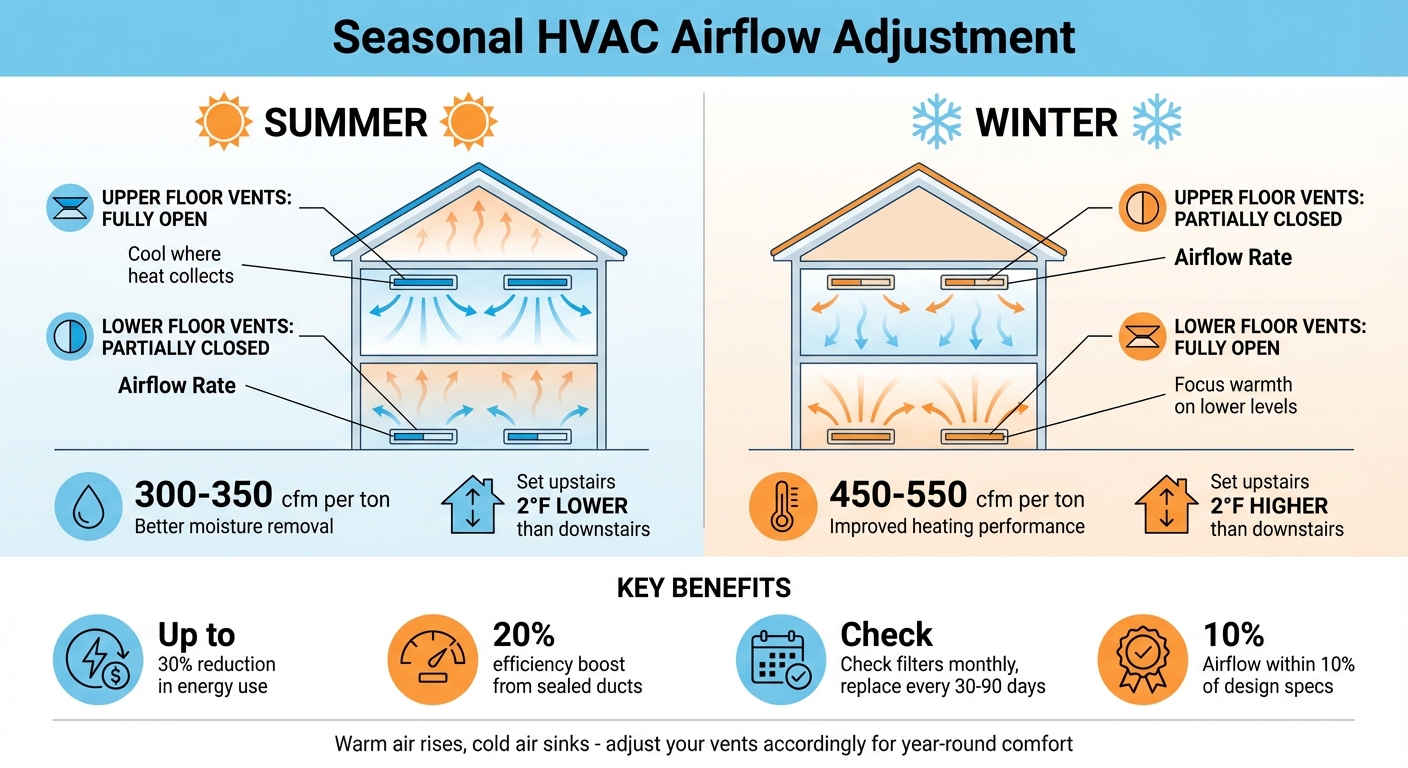
Seasonal HVAC Airflow Adjustment Guide: Summer vs Winter Settings
How to adjust the airflow for your heating and air conditioning (HVAC) system in your home
How Seasonal Changes Affect HVAC Airflow Requirements
Seasonal shifts call for specific tweaks to HVAC airflow to keep your home comfortable and efficient. In the winter, the focus is on delivering heat to lower levels, while in the summer, airflow should prioritize cooling the upper floors where heat tends to collect. This happens because of a basic principle: warm air rises, and cold air sinks. To counteract these natural tendencies, your HVAC system needs to adjust its airflow seasonally.
Temperature and humidity changes also play a big role in determining optimal airflow. For instance, during humid summers, airflow settings of 300–350 cfm per ton are better for removing moisture. In contrast, drier conditions benefit from higher airflow, around 450–550 cfm per ton, for improved performance.
"Slower air means colder air… Slower air means drier air. Humid climates need slower air; dry climates need faster air."
- Allison A. Bailes III, PhD, Founder, Energy Vanguard
While the standard airflow target is about 400 cfm per ton, sticking to a single setting all year ignores the seasonal changes in your home’s needs. Effective HVAC performance relies on balancing sensible cooling (temperature control) and latent cooling (moisture removal). This balance shifts with the seasons, and when it’s off, your system may end up working harder than it should. Adjustments tailored to these seasonal needs can prevent unnecessary strain, as we’ll explore further.
How Poor Airflow Adjustments Reduce HVAC Efficiency
When HVAC airflow settings don’t align with seasonal demands, efficiency takes a hit. For example, mismatched airflow can lead to short cycling, where the system turns on and off too quickly without fully conditioning the space. This on-off cycle not only reduces comfort but also wears out components like compressors and blower motors faster.
Improper airflow can lead to even bigger problems. During cooling cycles, insufficient airflow might cause evaporator coils to freeze. In heating cycles, it could lead to a gas furnace overheating or a heat pump tripping its high-pressure limits. These issues not only disrupt comfort but can also lower overall system efficiency by as much as 15%, driving up energy costs.
"The correct airflow for an air conditioner will be one that meets the sensible, meets the latent, and doesn’t exceed the total by 15, 20, or 30 percent, depending on the compressor technology."
- Ed Janowiak, HVAC Design Education Manager, Air Conditioning Contractors of America (ACCA)
Factors That Determine Airflow Adjustment Needs
Airflow adjustments aren’t just about physics – your home’s layout and structure are equally important. Multi-story homes, for instance, experience more noticeable temperature differences between floors compared to single-story homes. A two-story home might need more airflow directed to the upper floors during summer, while smaller, single-level homes may only require minor changes. Factors like ceiling height, room size, and the number of floors all influence how air should be distributed across zones.
Insulation quality and ductwork integrity are also major considerations. A poorly insulated home, where up to 85% of heat escapes through attic gaps in winter, will struggle to maintain warmth without proper airflow adjustments. Additionally, fluctuating outdoor temperatures require careful monitoring to keep the balance between sensible and latent loads in check.
How to Prepare Your HVAC System for Seasonal Transitions
Getting your HVAC system ready before the seasons change can help avoid breakdowns and keep it running efficiently. In fact, a well-maintained system can cut home energy use by up to 30%. The best times to handle these tasks are during spring and fall, right before the weather shifts.
Inspect Filters, Ductwork, and Vents
Start with the air filters. Check them monthly and replace them every 30–90 days, depending on how much dust and debris they collect. When installing a new filter, pay attention to the arrows on the frame – they should point in the direction of the airflow. Not sure which way the air flows? Turn on the system fan and feel for the pull of air.
Next, grab a flashlight and examine your ductwork. Look for cracks, holes, or disconnected sections. Watch for signs of moisture, mold, or pests – things like droppings or nesting materials are red flags. Every year or two, remove vent grates and check the first few feet of the ducts for debris or damage. Leaky or blocked ducts can lower HVAC efficiency by 20% to 30%, so sealing gaps with mastic or foil tape is a must.
Make sure supply and return vents aren’t blocked by furniture, curtains, or rugs – this forces your system to work harder. Keep at least 18 inches of clear space around each vent, and regularly dust or vacuum the grates to keep debris out of the ducts. If you have a multi-story home, adjust duct dampers seasonally: open upper-floor registers more in summer and reverse the settings in winter.
Once vents and ducts are in good shape, turn your attention to the thermostat for precise temperature control.
Check Thermostat Calibration and Settings
A clean and well-calibrated thermostat is key to maintaining a comfortable home. Dust it off twice a year to keep the sensors working properly. Check for loose wires or buildup behind the buttons, as these can cause the system to cycle incorrectly. Also, make sure the thermostat isn’t near drafty areas, direct sunlight, or heat sources like electronics or stoves – these can throw off its readings.
To test calibration, set the thermostat to a specific temperature, like 72°F, and use a separate thermometer to see if the room temperature matches. Switch the system to the appropriate mode – Heating or Cooling – based on the upcoming season to avoid running the wrong system on an unexpectedly warm or cool day. For homes with dual thermostats, set the upstairs thermostat two degrees different from the downstairs one for better energy efficiency.
Seal Air Leaks and Improve Insulation
Air leaks can seriously impact your HVAC system’s performance. Sealing and insulating ducts can boost heating and cooling efficiency by as much as 20%.
"Sealing and insulating ducts can improve the efficiency of your heating and cooling system by as much as 20 percent – and sometimes much more."
To locate hidden leaks, try a smoke test: turn on the blower fan and hold a smoke source near duct joints. If the smoke shifts, you’ve found a leak. Use duct sealant (mastic) or metal-backed foil tape to seal gaps – avoid regular cloth duct tape, as it deteriorates over time. Focus on ducts in attics, crawlspaces, basements, or garages. Once sealed, wrap them in foil-backed insulation or preformed sleeves to shield them from extreme temperatures.
Don’t forget to check the weather stripping around doors and windows before winter. If it’s worn or missing, replace it to prevent drafts. Inspect your attic for any cracks or gaps that might need extra insulation to stop heat from escaping. These small adjustments can help eliminate temperature inconsistencies and keep your home comfortable throughout the year.
How to Balance Airflow for Comfort and Efficiency
Once you’ve prepped your HVAC system for the season, the next step is directing airflow to each room effectively. Following the recommendations from your routine HVAC inspection, making the right vent adjustments can ensure both comfort and energy efficiency. Balanced airflow is key to avoiding overly warm areas in summer and chilly spots in winter. The concept is straightforward: warm air tends to rise, while cold air sinks. Adjusting your vents with this in mind can make a noticeable difference. Here’s how you can fine-tune your system for optimal results.
How to Adjust Vents and Registers
During summer, fully open the vents on upper floors and partially close those on lower levels to counteract rising heat. In winter, reverse this setup to focus warmth where it’s needed most. If you live in a two-story home, try the two-degree rule: set your upstairs thermostat two degrees lower than the downstairs setting in summer (or two degrees higher in winter) to help maintain an even temperature throughout the house.
To check if airflow is balanced, you can use the paper tape method. Larger rooms, especially those with only one vent, often require more airflow. If furniture is blocking a vent and can’t be moved, installing a magnetic air deflector can redirect airflow toward the center of the room, improving circulation.
While proper vent adjustments are essential, it’s equally important to avoid some common misconceptions that can negatively impact your HVAC system.
Common Airflow Myths to Avoid
One widespread myth is that closing vents in unused rooms will boost efficiency. In reality, this can create back pressure in the system, leading to duct leaks and potential damage.
"Closing registers won’t push air to where you want it to go. What’s more, it will exacerbate leaks, cause back pressure on the system, and create condensation at the closed register, which may eventually lead to rusted ductwork." – North East Air Conditioning, Heating & Plumbing
Completely closing vents can also cause serious issues, like icing evaporator coils during cooling or damaging the heat exchanger during heating. Instead of shutting vents entirely, consider adjusting the manual dampers located within the duct system. These dampers, typically found in branch ducts, allow for more precise control over airflow without the noise or pressure problems that come with closed registers.
For the best results, start by reducing airflow to outlets that are receiving too much air. This will help redistribute it to areas that are underserved, creating a more balanced and comfortable environment.
How to Maintain Clean and Unobstructed Ventilation
Keeping your ventilation system clean and free from obstructions is key to ensuring your HVAC system runs smoothly and avoids unnecessary repairs. Once you’ve balanced your vents, the next step is regular upkeep, focusing on filters and outdoor units. These simple tasks can go a long way in maintaining efficient airflow and prolonging the life of your system.
Replace Filters and Keep Air Pathways Clear
For most homes, replacing 1-inch filters every 90 days is a good rule of thumb. However, if you have pets, smokers, or allergy concerns, it’s better to swap them out every 30 days. Steve Pacholski, Brand President at Varsity Zone HVAC, emphasizes:
"Replace filters every 30 days if you have pets, especially if you have more than one or pets that shed a lot".
Pleated filters generally last 60–90 days, while 4-inch media filters can remain effective for 6–12 months. To check if a filter needs replacing, turn off your HVAC system, remove the filter, and hold it up to a light source. If light barely passes through, it’s time for a new one. When installing the replacement, ensure the arrows on the filter point toward the blower, and make sure it fits securely.
Beyond filters, make sure there’s at least 18 inches of clearance around vents by moving furniture, rugs, or other obstructions. You can also remove vent covers and use a flashlight to inspect the ductwork for debris, pet hair, or signs of pests. If you spot mold, stop immediately and contact a professional, as this requires specialized handling. Once the indoor system is in check, turn your attention to the outdoor unit.
Clean Outdoor Units and Condenser Coils
Outdoor condenser units play a crucial role in heat exchange, and keeping them clean is essential. Aim to clean the unit at least once a year – spring is an ideal time, right before the cooling season kicks in. Dirty condenser coils can reduce efficiency and increase energy use by up to 37%. If you live near the coast or in areas with heavy pollen, consider cleaning the unit quarterly.
Before starting, turn off the power at the circuit breaker for safety. Trim back any grass or plants, keeping at least two feet of space around the unit. Use a garden hose with gentle pressure to rinse away dirt and debris; avoid high-pressure washers, as they can damage the delicate aluminum fins. If you notice any bent fins, a fin comb can help straighten them and restore proper airflow.
During winter, cover the outdoor unit to shield it from ice and debris. However, if you have a heat pump, skip the cover – it needs airflow to function properly. With regular cleaning and maintenance, your outdoor unit will stay in top shape year-round, ensuring your HVAC system operates efficiently.
Professional Testing and Certification for Proper Airflow
Ensuring your HVAC system runs smoothly often requires professional testing and balancing services. This is especially crucial during seasonal shifts when even small imbalances can lead to discomfort and wasted energy. Certified air balance companies rely on essential tools for air balancing like capture hoods, anemometers, and manometers to measure airflow at each register, uncovering issues that DIY fixes might miss. Let’s explore why these certified Testing, Adjusting, and Balancing (TAB) services are so valuable during seasonal transitions.
Benefits of Certified Air Balance Services
Certified TAB services take a systematic approach to measuring and optimizing airflow and pressure throughout your HVAC system. Technicians use precise tools to measure airflow, pressure, and temperature, making adjustments to dampers, valves, and fan speeds to align everything with the system’s design. The results? No more hot or cold spots, better mixing of outdoor and return air, and energy savings – hidden duct leaks alone can cause energy use to spike by up to 40%.
According to industry standards, airflow at each register should stay within 10% of the system’s design specifications. Certified professionals not only ensure this but also provide a stamped report verifying compliance with these standards. This documentation is often required for final inspections in commercial projects, making it an essential step in the process.
How Air Balance Masters Can Help

Air Balance Masters takes these benefits to the next level by offering tailored solutions for HVAC and general contractors working across MD, VA, PA, NJ, NY, DE, and DC. They provide certified air balance testing, reporting, and certification services designed to keep projects on track. Their expertise ensures systems meet design specifications, which is critical for securing final inspection approvals and certificates of occupancy without delays.
With fast turnaround times and thorough deficiency reporting, Air Balance Masters helps contractors avoid costly setbacks and callbacks. Whether you’re commissioning a new commercial HVAC system or addressing ongoing comfort issues in an existing building, their TAB services are designed to ensure your system operates at peak performance through every seasonal change.
Adjust airflow with the seasons
Making seasonal airflow adjustments is a smart way to keep your HVAC system running efficiently and extend its lifespan. By inspecting filters and ductwork, adjusting dampers and vents, and clearing pathways before the seasons change, you can prevent unnecessary strain on your system. The result? Lower energy bills and fewer costly repairs.
Steps like sealing air leaks and calibrating your thermostat help eliminate temperature imbalances and reduce the workload on your system. Regularly replacing filters ensures proper airflow, and simple tricks – like labeling dampers for "summer" and "winter" positions – can make future adjustments a breeze.
While routine maintenance can tackle many issues, professional services take it a step further. Expert air balancing fine-tunes your system to match its design specifications. As Rob ‘Doc’ Falke, President of the National Comfort Institute, explains:
"Balancing is the single-most important step that can be taken to assure your systems produce comfort and operate efficiently".
For commercial projects in the Mid-Atlantic region, certified TAB services from Air Balance Masters provide the compliance documentation needed to secure final approvals without delays.
FAQs
How do seasonal airflow adjustments help reduce energy costs?
Seasonal airflow tweaks can make a big difference in how efficiently your HVAC system runs, which ultimately saves you money on energy bills. When airflow is blocked by things like dirty filters, clogged coils, or leaky ducts, your system has to work overtime. This extra effort means more energy use and higher utility costs. By taking simple steps – like cleaning or replacing filters, sealing ducts, and adjusting vents at the start of each season – you can help your system run more smoothly. In fact, these changes can cut fan-related energy use by as much as 40–60%.
During the summer, setting your thermostat to 78°F when you’re home (and raising it when you’re away) helps ease the cooling load. Pair that with proper airflow over the evaporator coil, and your system doesn’t have to work as hard. In the winter, closing vents in unused rooms and keeping the thermostat at 68°F in occupied spaces can prevent overheating and reduce fuel use. These small seasonal adjustments can shave 10–20% or more off your annual heating and cooling costs.
To ensure your HVAC system is running at its best, consider working with a certified air-balance provider like Air Balance Masters. They can check that every room gets the right amount of conditioned air, verify system performance, and help you maximize energy savings while staying compliant with inspection requirements.
What are the signs that your HVAC system’s airflow needs adjustment?
Signs of poor airflow in an HVAC system can show up as uneven temperatures in your home. For example, you might notice some rooms feel too warm in the winter or too chilly in the summer, even when your thermostat is set just right. Another clue is weak or inconsistent airflow from vents, especially in rooms that are farther away or upstairs, which can point to an imbalance in the system.
Additional red flags include musty smells, excessive dust accumulation, and high indoor humidity, all of which suggest that air isn’t circulating as it should. You might also observe higher energy bills as your system struggles to keep up, often accompanied by louder operation and added strain on its components.
If any of these issues sound familiar, it may be time for a professional air-balance assessment. Air Balance Masters specializes in identifying and fixing airflow problems, helping your HVAC system run smoothly and keeping your home comfortable throughout the year.
Why is professional air balancing essential for efficient HVAC performance?
Professional air balancing is all about making sure your HVAC system runs as efficiently as possible. By adjusting airflow to match the system’s design, it helps tackle uneven temperatures, cuts down on energy use, and reduces wear and tear on your equipment – helping it last longer.
When airflow is properly adjusted, it doesn’t just save energy – it also improves comfort. Every room gets the right amount of heating or cooling, so no space is left too hot or too cold. For contractors, certified air balancing can make final inspections smoother and speed up the process of obtaining certificates of occupancy.


